
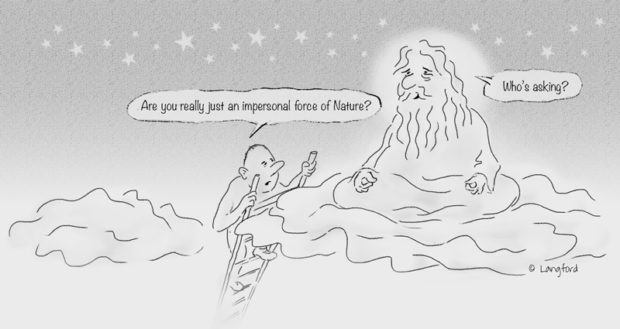
The short answer: "Whatever we think it is, want it to be, or believe it to be".
I Googled "inner peace and happiness" and found 75,000 results - so obviously it depends on who you ask: Bishops, Buddhists, Scientologists, Rabbis, Swamis, Imams, Therapists, Philosophers, Psychiatrists, Uncle Toms or Auntie Mabels, each may have very different views.
In this brief guide I share how I found, or rather developed, inner peace and happiness by regularly pausing the Self of Self and enjoying the state of pure consciousness. I've called this process "spiritual enquiry".
Was it what I thought it was, wanted it to be, or believed it to be? No, No and No! It's beyond anything I could have imagined or made up! I wasn't looking for inner peace and happiness and had no idea that practicing spiritual enquiry would lead to it. I was surprised to find that I had it!
Inner peace and happiness had developed in my absence, during periods of pure consciousness (see the spiritual enquiry section). So it is totally independent of whatever I could have imagined, wanted or believed it to be.
Remember a moment in your life when everything was so wonderful that you thought "things can't get any better"? Pure consciousness is that moment, but without needing your presence or anything external to cause it!
Regular experiences of pure consciousness has a subtle yet profound effect on the human body - this affects various aspects of the sense of self in different ways. The words "inner peace and happiness" can't possibly convey how wonderful this feels.
There are many varieties of Inner peace an happiness and many approaches to finding it: spirituality, religion, philosophy, personal growth, drugs, following charismatic leaders, etc. There is a crucial difference between all of these and the form of inner peace and happiness described in this Brief Guide...
All other methods require the participation of the sense of self - an individual has to pursue a particular path, belief or practice to acquire the type of inner peace and happiness they prefer.
In spiritual enquiry the opposite is true - the sense of self of has to be entirely absent. Without the presence of an individual, inner peace and happiness develops organically in the body during the experience of pure consciousness. It is completely independent of any belief or idea of what we think it could be.
So "I" did not find inner peace and happiness - it developed in the body that hosts me. Of course it affects me and how I feel internally and relate to the world externally.
To glimpse beyond the sense of self by experiencing pure consciousness is considered to be a significant spiritual ability. Patanjali wrote about this about 2000 years ago, and even then it would have been old knowledge.
Most people sense that something bigger and greater than themselves exists in the universe. We can ask questions about ultimate reality, the purpose of life, who am I, etc, but it seems to me that the human mind is not an instrument that can answer them.
The beauty of spiritual enquiry is that it give us a glimpse beyond the limits of intellect, beyond the sense of self, beyond ideas, knowledge, concepts, instincts beliefs and questions...
Don't believe me - practice the spiritual enquiry exercise to confirm or refute this for yourself.
Practicing the spiritual enquiry exercise causes the Sense of Self to pause, and to experience the state of pure consciousness.
U.G. pointed out that the Sense of Self is a mental function that connects each moment together to create the experience of having a continuous independent identity. It’s like a film projector playing a sequence of separate images that appear to be a continuous story.
If who and what we are is just a mental function this needn't be a shock to our ego - the human brain is considered to be one of the most complex structures in the known universe, and consciousness one of the most baffling phenomenon to understand. So we are still a miracle to behold!
I'm not an expert on world spiritual practices. The only other form of spirituality I've heard of that teaches pausing the Sense of Self is Japanese Zazen. They call this state "no-mind" and consider it to be a higher state of consciousness.
Zazen involves deep meditation, combined with a koan, a type of mantra. It seems to be more suited to a monastic life style and involves lots of discipline, ritual, ceremony and conformity.
I guess this is a bit too heavy for most people and it hasn't caught on in the West.
The form spiritual enquiry in this brief guide uses a simple visualisation exercise that makes this esoteric art into an effortless everyday pleasure. It doesn't involve meditation, mantras or rituals and it can be effortlessly practiced during a modern busy lifestyle (but see disclaimer).
Please let me know if you hear of other places that teach the experience of pure consciousness.
Enlightened people have described how their Sense of Self became lost or simply uninstalled. The enlightened human organism is conscious, aware and experiences, but without an "I' there is no individual entity present, no experiencer. But outwardly they don't appear any different to you or me.
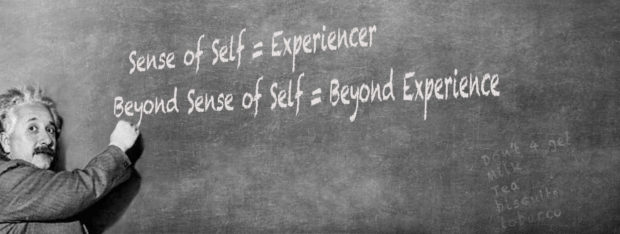
Their eyesight is just the same as ours, and they are do all the normal things that life requires. They are certainly not zombies that dribble at the mouth and bump into chairs! But without an "I", there is no them, no us, no inner world, no outer world.
The spiritual enquiry exercise described in this brief guide will enable you to master the art of briefly pausing the Sense of Self. It can't make you enlightened but it can give you a glimpse beyond the sense of self.
It can also lead directly to developing inner peace and happiness. This will change the way you experience yourself and relate to the world, and can add a greater depth and meaning to everyday experiences.
Spiritual enquiry has a cumulative effect, so insights are likely to deepen over time.
Both spiritual enquiry and Zazen are ways to experience pure consciousness by causing the sense of self to pause. Otherwise they share little in common.
From what I understand, Zazen requires a master and student relationship. It involves deep meditation combined with a koan (mantra). It involves a lot of ritual and ceremony, and an ascetic lifestyle. Zen monks wear orange costumes.
Spiritual enquiry can be self-taught, doesn't use meditation, mantras, rituals, ceremony or special clothing. It's based around a simple visualization technique and can be practiced during a normal busy day (see the spiritual enquiry exercise)
Zazen calls the state of pure consciousness "no mind" and considers it to be a higher level of consciousness. Spiritual enquiry recognizes pure consciousness as the natural state of consciousness an infant is born with. When the sense of self develops this state becomes inaccessible.
A great benefit of spiritual enquiry is the development of inner peace and happiness. For what I've read about Zazen inner peace and happiness has not been mentioned.
Whatever method is used, pausing the Sense of Self and the experience of pure consciousness is fundamental to spirituality and both provide a fulfilling appreciation of life.
The Sense of Self pauses many times during the day without our noticing and doesn't stop us from behaving normally in the world. (See Pausing the Sense of Self)
So it's not surprising that enlightened people, who have permanently lost the Sense of Self, may outwardly appear to be quite normal. They don't bump into chairs or foam at the mouth, at least not the ones I've met!
The bad news is that they may be less likely to excel at subjects such as mathematics, engineering and science.
The good news is that the lack of a Sense of Self is definitely an asset for anyone planning to become a spiritual teacher.
Pure consciousness is a refreshing experience. It's taking a holiday from the constant mental activity that keeps us from appreciating how timeless and precious the present moment is. It's a natural spiritual high.
I doubt I would feel quite as happy, positive or optimistic if I didn't have an organic sense of inner peace and happiness. I feel whole and complete and at peace within myself. The regular experience of pure consciousness means that I don't have a use for recreational drugs, or suffer from bouts of depression.
I may be biassed but I can't imagine that any amount of success, wealth or worldly happiness could replace the deep sense of inner peace and happiness that I've gained from spiritual enquiry. Indeed some of the most talented, creative, successful and inspiring people have turned out to have deeply troubled inner lives.
I guess a sense of inner peace and happiness will probably have similar mental and physical health benefits to people who meditate regularly. So it may reduce stress, the incidence of some diseases, and increase longevity.
I'm affected by emotional baggage and often become tense over minor matters, but briefly pausing the sense of self helps me to keep things in perspective.
I still have a self-critical inner voice that loves to find faults, but now it doesn't get in the way. I'm self aware and will promptly acknowledge mistakes and do my best to learn from them.
I still use personal growth techniques - the Sense of Self and its baggage is so strong and persistent that it's sensible to use more than one way to deal with it.
Have you ever had a moment in your life when everything was so wonderful that you thought "things can not get any better"? Pure consciousness is that moment without the need of anything external to cause it!
Short answer: No.
Being in the moment has several meanings. As a personal growth technique it can mean being fully present and aware. In meditation it can mean deep thought-free awareness. It may also be used in philosophical and religious approaches to life.
But whichever way we experience being in the moment involves the Sense of Self being active. Pure consciousness, however, requires pausing the Sense of Self .
The experience of pure consciousness is the only way to actually be in the moment. In our absence, when the sense of self is paused, there is no moment to be in. The experience is beyond "you", beyond "I", and beyond even the concept of "moment".
By practicing the spiritual enquiry exercise pure consciousness can be experienced. It takes only 30 seconds and is a few moments well spent!
Spiritual enquiry
Stumbling into it
Some extras
Disclaimer